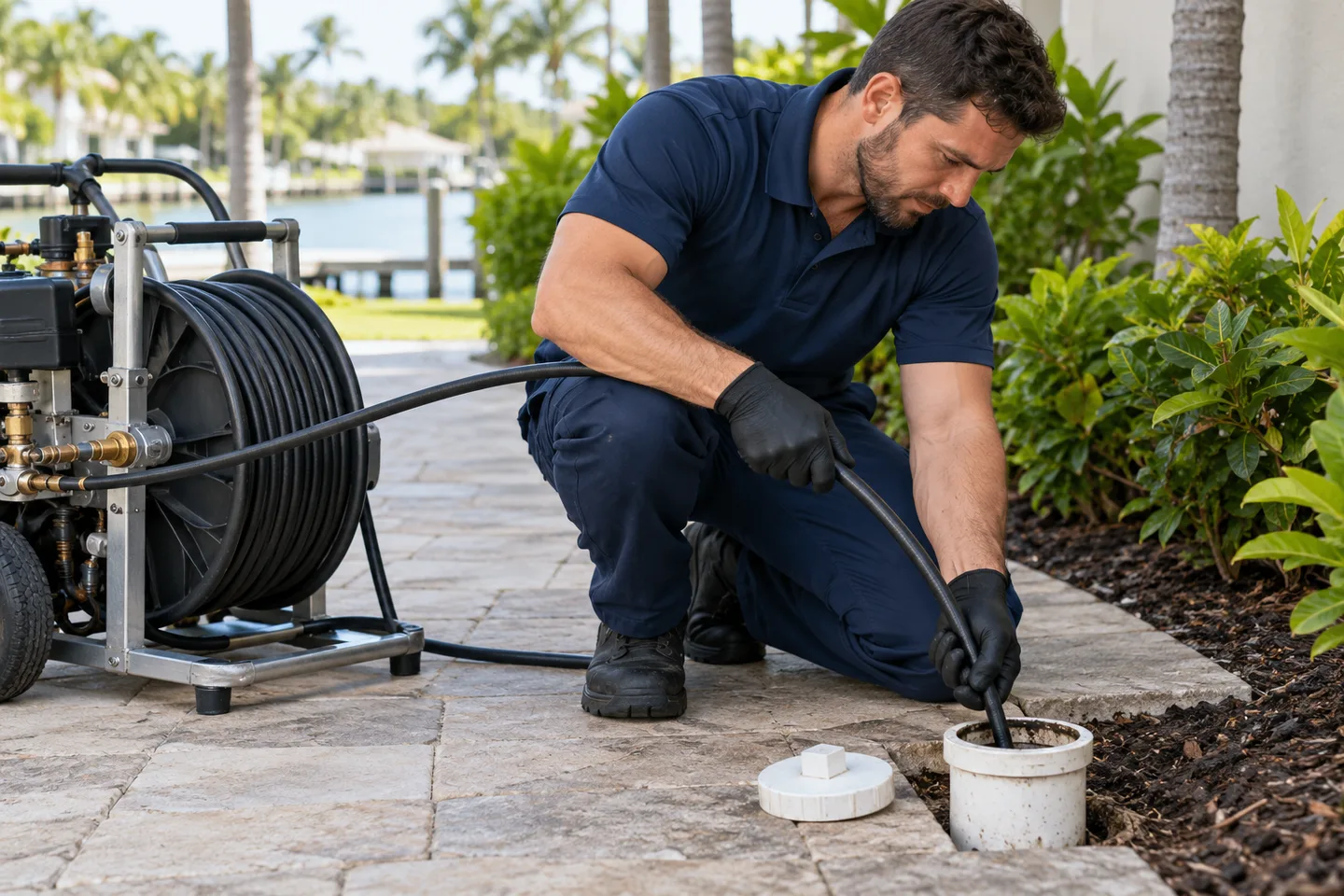
FOCUSED ON YOUR DRAIN
When opening the drain leaves buildup behind
Opening a narrow channel through a clog and removing deposits from pipe walls are different objectives. Suitable jetting may address grease, sludge and loosened debris, but poor pipe condition or an uncontrolled discharge route can make it inappropriate. Pressure alone does not determine the method, and cleaning cannot correct a structural defect.
When to call about this service
- A drain slows again soon after conventional clearing
- Grease or sludge buildup is suspected in an accessible line
- A commercial waste line needs a condition-based cleaning plan
- Inspection indicates deposits that suit water-jet cleaning
What the symptoms can mean
These patterns help frame the service conversation. The provider confirms the affected line and a suitable approach after assessment.
| Situation | What needs attention |
|---|---|
| A sound accessible line has recurring grease or sludge deposits | Discuss whether water jetting fits the material and line arrangement. The assessment should include the intended cleaning reach, available water supply and control of downstream flow and debris. Suitability comes before choosing pressure or a particular nozzle. |
| A fixture has a local stopper or trap obstruction | Start with that local restriction. A broader jetting scope is not automatically needed when accessible material or a local component explains poor drainage. The independent provider should explain the reason for expanding beyond a local clearing. |
| Inspection identifies weakened pipe or a displaced joint | Review whether cleaning is limited or unsuitable. A different assessment or repair scope may be needed. Jetting cannot restore damaged structure, and selecting a more aggressive cleaning process is not a substitute for assessing the defect. |
Assess the line before choosing jetting
The independent provider considers pipe size, material, bends, access and known condition before recommending jetting. Existing inspection findings are useful, especially where cracks, offsets or deterioration are known. A camera assessment can help establish what is present and which conditions limit cleaning. Standing water or an impassable blockage can restrict visibility, so the findings should distinguish the section actually seen from any part that remains uncertain.
Cracks, severely weakened pipe, displaced connections or a collapse may make jetting inappropriate or limit the work. Water pressure, nozzle selection and operating method must suit the application. The purpose of assessment is to avoid treating an unknown line as though it were sound. If repair is the real need, additional cleaning should not be presented as a permanent correction.
A defined cleaning scope for the right deposits
Suitable water jetting may address grease, soft deposits and accumulated debris that restrict the available flow path. The practical result depends on the material present and the pipe's condition. Root-related restrictions and hard obstructions require separate consideration; removing material does not close a defect or change the line's slope. Tell the independent provider whether previous work found a recurring physical problem.
Jetting requires control of water and debris as well as access to the pipe. Water supply, cleanout position, hose route and the downstream connection affect the setup. A sanitary drain and a private stormwater pipe need separate consideration of where flow and removed material will go. The independent provider should confirm the work boundary and any material-handling requirements, rather than assume that deposits are harmless because cleaning uses water.
Verify flow and plan appropriate maintenance
Once cleaning is complete, available flow checks and further observation can help explain the result. Where inspection is appropriate, it may reveal deposits or structural conditions that were previously hidden. Ask what was reached, what limited the work and what symptoms would justify another call. A clear account is more useful than assuming the entire drainage system is free of every possible issue.
Maintenance should reflect the deposits found and how the system is used. A food-service line exposed to grease needs a different discussion from a residential drain with a one-time obstruction. Jetting does not replace grease control, trap maintenance or repair of root-entry points. The independent provider explains its equipment and appropriate method and performs any agreed cleaning. Drain Cleaning Fort Pierce supplies the referral connection.
Find the service that fits the symptoms
sewer line cleaning, main drain cleaning or commercial drain cleaning may be relevant if the blockage affects a different part of the system. For an overview, visit drain cleaning in Fort Pierce.
RELATED DRAIN GUIDES