THE DIRECT ANSWER
The best way to clean a drain depends on the blockage and the pipe. Accessible hair or debris may need simple physical removal, while deeper clogs can require professional cable cleaning. Suitable lines with substantial grease or residue may benefit from hydro jetting. Multiple affected fixtures or returning backups need assessment before another clearing attempt.
In this guide
- Start with the drainage pattern, not a bottle of cleaner
- Opening a clog, cleaning a line and repairing a pipe are different
- Can you unclog a drain yourself?
- What professionals use instead of chemical drain cleaners
- When hydro jetting can be a useful option
- What a drain camera can and cannot tell you
- Why household mixtures are unreliable for a substantial clog
- Match the next step to the symptom
- Why kitchen, bathroom and shared lines need different questions
- What should happen after a drain is cleared?
- Arrange the right scope for your property
Start with the drainage pattern, not a bottle of cleaner
The best thing to clean out drains is the method that reaches the obstruction without creating a new problem. A hair mat at a shower opening, food residue in a kitchen branch and roots inside a sewer lateral are different jobs. A product that changes the smell or temporarily improves one fixture does not show that a deeper blockage has been removed. The first useful decision is whether the symptom belongs to one fixture or several connected drains.
Note what happened during normal use before the blockage became apparent. A bathroom basin that drains slowly while the shower and toilet work normally gives a different starting point from a tub that fills when the toilet is flushed. Do not run repeated tests if water is already rising. For local enquiries, drain cleaning in Fort Pierce begins with describing the affected fixtures, when the problem started and whether wastewater has escaped the plumbing.
Opening a clog, cleaning a line and repairing a pipe are different
Clearing means restoring a route for wastewater to pass. Cleaning can involve removing more material from the pipe walls rather than opening only a small channel. Inspection looks for the nature and location of the problem. Repair addresses a physical defect such as a broken connection or damaged section. These tasks can be related, but they should not be presented as interchangeable services.
A fixture may begin draining after an obstruction is disturbed even though deposits remain farther along the line. That does not make every cable cleaning inadequate: a localized blockage may be resolved without wall-to-wall treatment. Conversely, a larger machine is not automatically a better answer. The practical goal is an appropriate result for the observed problem, with any remaining uncertainty explained before additional work is approved.
Can you unclog a drain yourself?
Sometimes, when the problem is isolated, accessible and uncomplicated. Removing collected debris from a drain screen or a removable stopper can address material near the opening. A suitable plunger may help a simple fixture obstruction when no chemical cleaner is present and there is no active overflow. Follow the fixture and tool instructions, protect the surrounding area and stop if the situation is unclear. These limited checks are different from dismantling concealed plumbing or forcing equipment into an unknown line.
Professional help becomes more appropriate when several fixtures react together, wastewater returns through a low drain, an object is lodged beyond reach, or the same obstruction keeps returning. Stop before a manageable blockage becomes an overflow or a damaged connection. Tell the provider about earlier attempts, including any chemical products. The clogged drain cleaning service explains the distinction between a fixture-level stoppage and a shared-line problem.
What professionals use instead of chemical drain cleaners
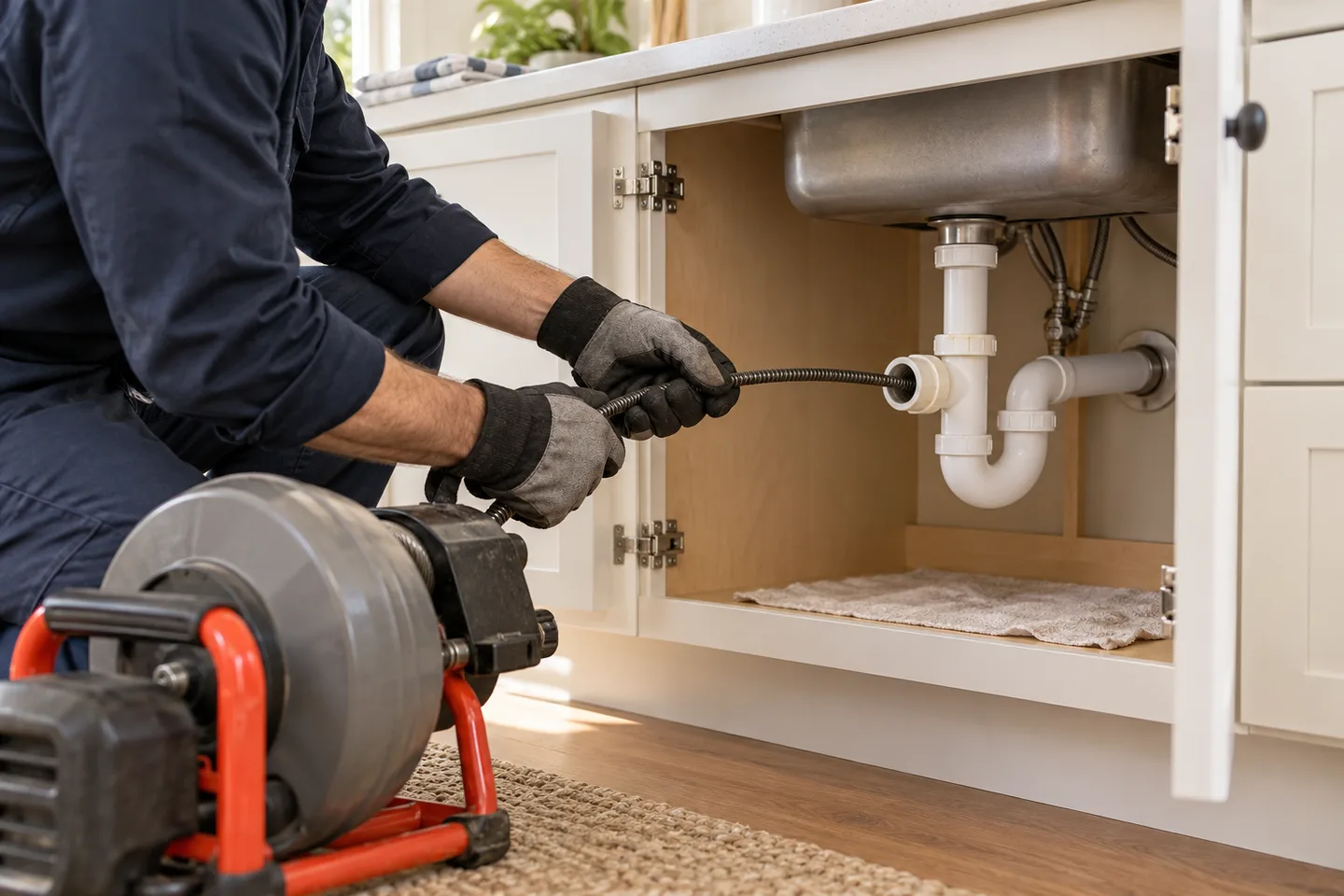
A professional can choose mechanical tools according to the fixture, pipe diameter, access and obstruction. A toilet auger is designed for the toilet's passage; smaller cable equipment can reach suitable sink and branch lines. Larger cable machines and selected cutting attachments address different main-line obstructions. These categories exist because one cable size and cutting head cannot be assumed appropriate for every bend, pipe or blockage.
Cable cleaning works by physically engaging the material. Depending on the attachment and situation, it may retrieve, break apart or cut an obstruction. The provider must consider pipe condition and the risk of the tool becoming caught. This is why a homeowner's report of a hard object matters. Mechanical access also has limits: an inaccessible line or a suspected structural failure may change the plan before cleaning proceeds.
When hydro jetting can be a useful option
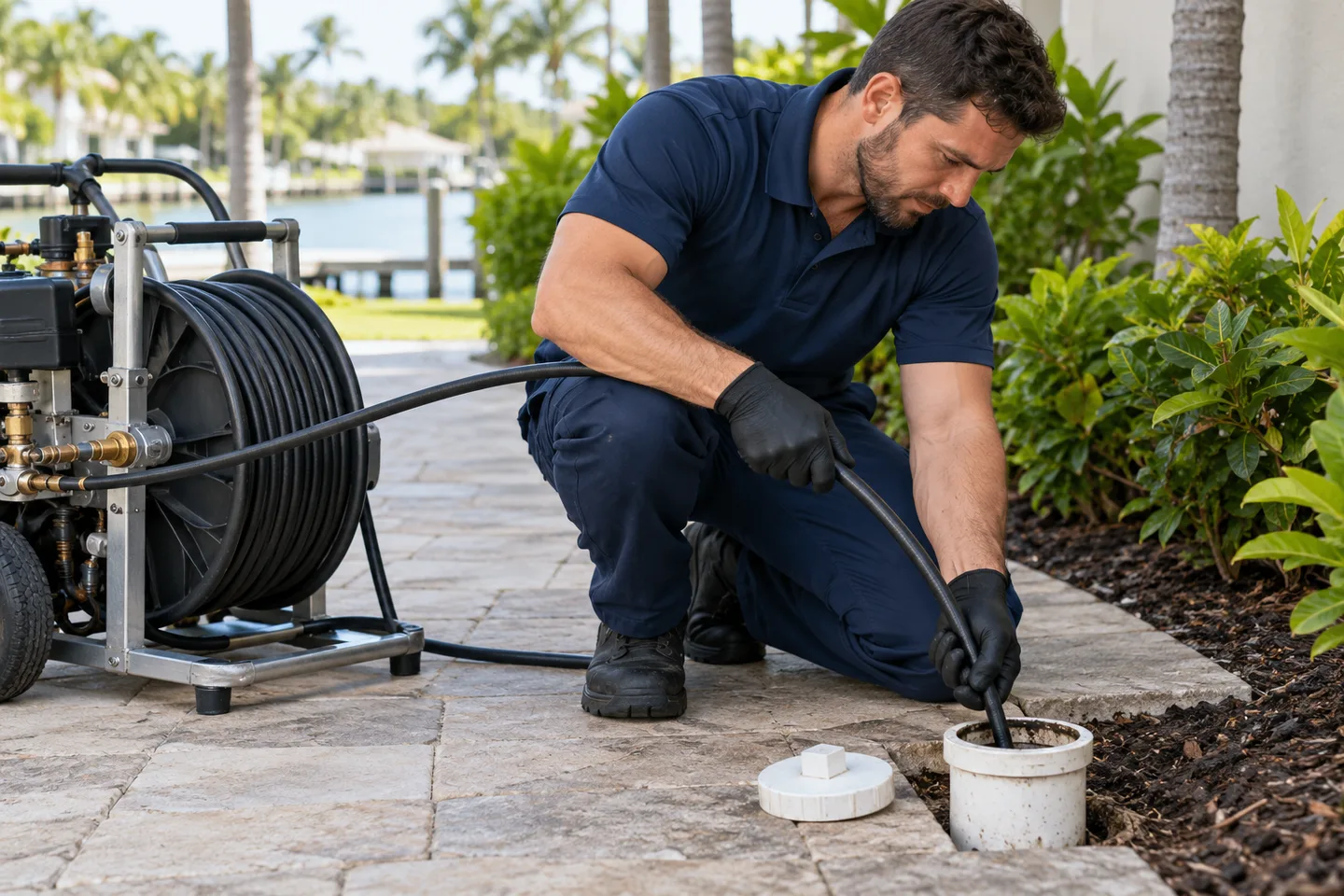
Hydro jetting uses a hose and selected nozzle to deliver pressurized water inside a suitable line. It can address grease, sludge and other deposits that restrict the pipe's usable opening. Assessment matters because effective jetting depends on access, line condition, the material being removed and a workable route for debris and wastewater. A routine sink stoppage does not automatically justify this method.
Ask what the proposed jetting is intended to accomplish and what evidence supports the choice. Where pipe damage is suspected, the provider should explain how condition will be evaluated before deciding whether jetting is appropriate. Hydro jetting in Fort Pierce is a cleaning option, not a repair for a collapsed section, an offset joint or poor drainage grade. No cleaning method makes those defects disappear.
What a drain camera can and cannot tell you
A drain camera can help show visible conditions inside an accessible pipe. It may reveal deposits, an intrusive object, roots or an apparent defect. However, standing wastewater, heavy buildup, access restrictions and the camera's route can limit the view. An inspection is therefore a way to collect evidence, not a promise that every part of the drainage system will be seen in one pass.
A provider may need initial clearing to obtain a useful view, or may recommend inspection because a previous cleaning lasted only briefly. Ask which section was inspected, what was visible and whether the recording identifies a location. Separate a visible finding from a suggested explanation. For example, recurring blockage alone does not prove roots; a conclusion should be connected to observations and the actual pipe arrangement.
Why household mixtures are unreliable for a substantial clog
Foam, a fresh smell or a short improvement in flow is not proof that dense hair, a foreign object or hardened deposits have been removed. Baking soda and vinegar react together, but the visible fizz is not a dependable substitute for reaching a substantial obstruction. The separate guide to baking soda and vinegar for clogged drains explains why the reaction is often confused with effective cleaning.
Chemical drain products also differ from one another. Some contain corrosive ingredients, and a blocked fixture can retain the product where later work causes splashing. Do not mix household cleaners, add a second product to an unknown first one, or continue plunging a drain that may contain a corrosive cleaner. Keep the label available for the provider. A stronger mixture is not a safe substitute for identifying the problem.
Match the next step to the symptom
Use the following distinctions to describe the problem rather than to make a final diagnosis. Pipework hidden behind walls or below ground can connect fixtures in ways that are not obvious from the room layout. The provider's findings determine the actual cleaning route.
| What you notice | What to discuss |
|---|---|
| One basin or shower is slow | Accessible debris, the fixture connection and the branch serving that fixture. |
| A kitchen sink blocks repeatedly | Food residue, grease deposits, previous cleaning and the length of line reached. |
| A toilet flush raises water elsewhere | A restriction downstream of the connected fixtures and the extent of affected plumbing. |
| Drainage improves, then fails again | Remaining buildup, a repeated input of debris, or a physical defect needing investigation. |
What should happen after a drain is cleared?
Where conditions allow, checking the affected fixtures under controlled use helps establish whether drainage has improved. A check should reflect the original complaint: a basin draining does not by itself explain why laundry discharge previously raised water in a shower. Ask which fixtures were checked, whether symptoms remained and whether any limitations prevented a fuller assessment.
Keep a record of the line worked on, access used, method selected and any findings. This information is especially useful if symptoms return. Avoid a maintenance schedule based solely on the age of the home or a generic calendar interval. A recommendation should explain the particular deposits, operating conditions or defects that make further attention worthwhile.
Prevention should address the material entering the particular drain. Use a suitable screen where hair collects, empty food scraps into solid waste and keep cooking fats out of the kitchen drain. Do not treat a disposal as permission to send unlimited solids into a small branch. These habits reduce avoidable inputs, but they cannot correct a hidden defect or guarantee that an existing deposit will disappear.
If normal use causes another slowdown soon after service, report the same fixture pattern and the timing. Do not repeatedly buy products to manage a symptom that now has a useful service history. The important question becomes why the earlier result did not last and what evidence can guide the next decision.
Arrange the right scope for your property
Before calling, prepare the property address, affected fixture list, previous service details and any access restrictions. In a rented home or shared building, identify who can authorize work beyond an individual fixture. For properties in Fort Pierce North, as elsewhere in the service area, the useful details are the actual symptoms and building access; a neighborhood name alone cannot establish the pipe material or cause of a blockage.
Drain Cleaning Fort Pierce is a referral-based service connecting callers with independent professionals. Call (772) 261-6544 to discuss the problem. The independent provider confirms availability, proposed scope and the actual price after the call discussion; a site assessment may be needed to finalize the work. Confirm inspection, cleaning and any separate repair or contaminated-water cleanup before authorizing them.
Related questions
What is the best thing to clean out drains?
There is no single best product for every drain. Accessible debris may need physical removal, a deeper obstruction may need suitable mechanical cleaning, and substantial deposits in an appropriate line may justify hydro jetting. The pipe, symptoms and access determine the choice.
What do professionals use instead of chemical drain cleaners?
Options include fixture-specific augers, cable cleaning machines, selected cutting attachments, water jetting and inspection cameras. The provider chooses equipment for the actual line and obstruction rather than applying every method to every drain.
Can I unclog a drain myself?
Limited checks may be reasonable for an isolated, accessible obstruction when no drain chemicals or active overflow are involved. Multiple affected fixtures, wastewater backup or a recurring blockage are reasons to stop and request assessment.
Does hydro jetting repair damaged drainpipes?
No. Hydro jetting is a cleaning method. A broken connection, collapsed section or other structural problem needs a separate assessment and appropriate repair decision.