FOCUSED ON YOUR DRAIN
A grease trap and its connected drains work together
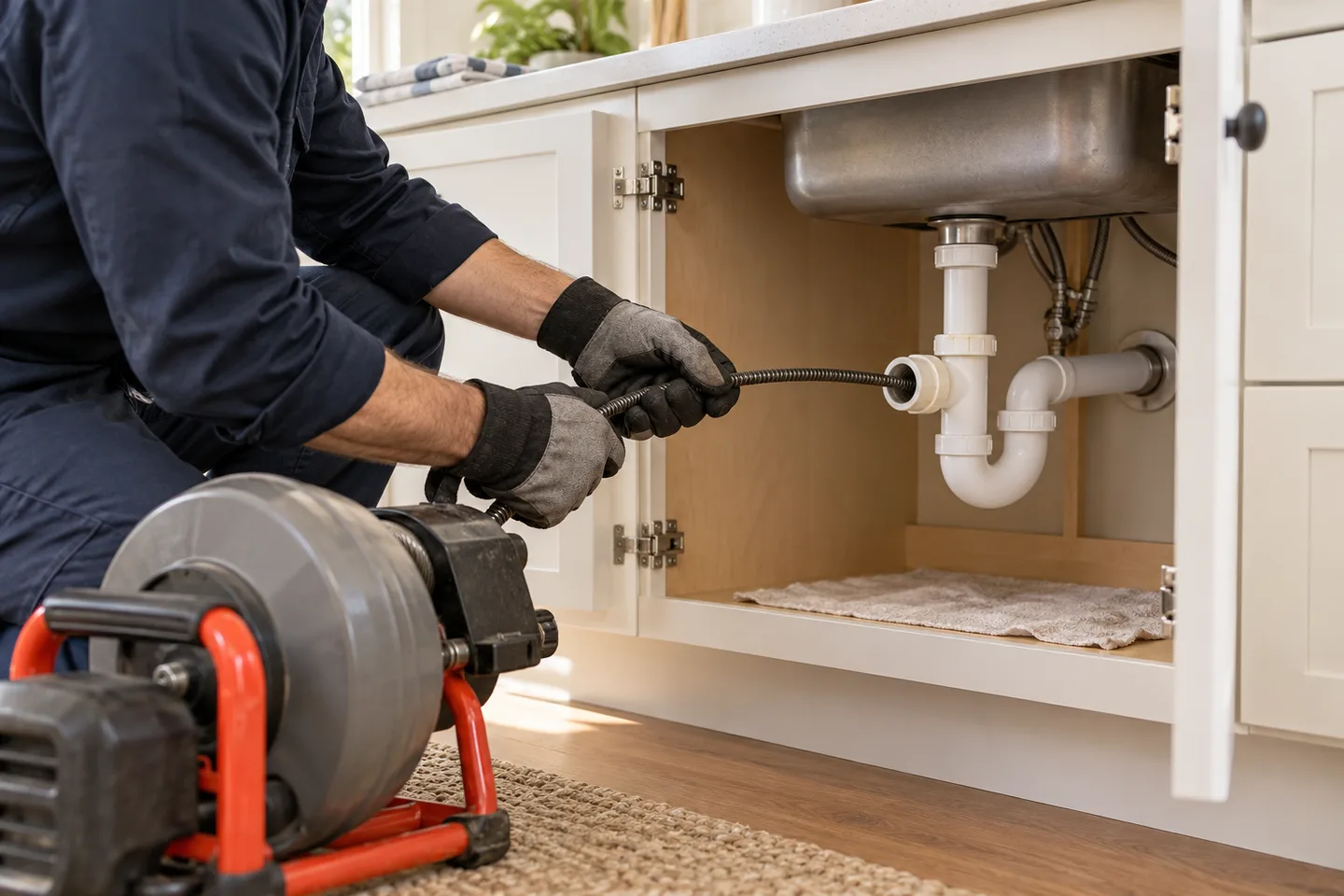
A commercial kitchen can drain poorly because of grease and food residue in the waste pipe, retained fats, oils and grease in the trap, or both. Sink clearing does not maintain the trap, and trap cleaning does not automatically clear every connected branch. Identify the affected fixtures and how symptoms relate to kitchen activity.
When to call about this service
- Kitchen drainage slows during ordinary washing activity
- Grease and solids have accumulated within an accessible unit
- A known maintenance interval has been missed
- Recurring kitchen backups involve the trap's connected waste route
What the symptoms can mean
These patterns help frame the service conversation. The provider confirms the affected line and a suitable approach after assessment.
| Situation | What needs attention |
|---|---|
| The trap has retained grease or solids and maintenance is overdue | Assess the unit type, capacity and removal requirements. Confirm that the independent provider can clean the specific equipment and arrange appropriate transfer, disposal and documentation; opening a sink line does not remove retained trap contents. |
| The trap was cleaned but a connected sink still backs up | Assess the branch and downstream waste route. Trap maintenance and pipe clearing address different components. Describe when the backup occurs and what the earlier service actually covered before agreeing another trap-cleaning visit. |
| A large exterior interceptor or unusual waste stream is involved | Confirm equipment capacity, access, waste handling and authority requirements before scheduling. The referral itself does not establish pumping or disposal capability. Agree a provider-specific scope that matches the actual unit and contents. |
Confirm the trap type and service requirements
An under-sink trap and a large exterior interceptor differ in capacity, access and the equipment needed to remove retained material. Identify the unit from its label or existing records where possible. Explain whether earlier service removed the contents or only addressed a connected pipe. That distinction helps the independent provider determine whether the task is trap maintenance, drain clearing or a coordinated scope involving both components.
The proposed work should identify material removal, accessible components, transfer and appropriate disposal. Required pumping capacity, approved waste handling and any documentation must be confirmed by the independent provider. A general referral for grease-trap service does not establish that every tank size or waste stream is covered. Larger exterior units or unusual contents may need a different provider capability or separately agreed scope before any visit proceeds.
Protect the connected line and keep useful records
Fats, oils, grease and settled food solids need to be removed through appropriate maintenance rather than flushed farther into the sewer. Additives are not a substitute for removing accumulated material. If drainage remains restricted after the trap is maintained, the connected kitchen branch or downstream line may need its own assessment. Describe any previous blockages or findings before selecting a cleaning method.
Local utility requirements and the equipment manufacturer's instructions can affect maintenance and documentation. Keep service dates, quantities or disposal records when supplied, observed conditions and any repair recommendations with the kitchen's maintenance records. Do not assume a general schedule meets every site's requirements. Confirm applicable obligations with the relevant authority and responsible property or business manager.
Plan cleaning around kitchen operations
Provide opening hours, food-preparation periods and access restrictions when calling. A work area may need to be kept clear while the unit is serviced, so coordinate with the person responsible for kitchen operations. Explain whether shutting off affected fixtures interrupts the whole kitchen or a single work area. Current scheduling and any operational limitations are agreed directly rather than assumed.
Keep the cleaning record, findings and any waste documentation with the kitchen maintenance information. For properties connected to the FPUA sewer system, confirm its applicable grease-hauler waste-manifest requirements rather than assuming that ordinary drain-clearing records are sufficient. Staff practices and maintenance both matter: collect cooking oil separately and scrape food waste before washing. The independent provider confirms the actual removal, handling and documentation included in its agreed work.
Find the service that fits the symptoms
hydro jetting, kitchen drain cleaning or commercial drain cleaning may be relevant if the blockage affects a different part of the system. For an overview, visit drain cleaning in Fort Pierce.
RELATED DRAIN GUIDES