THE DIRECT ANSWER
Keep cooking grease, oil, coffee grounds, food scraps, wipes, hygiene products, hair and hazardous liquids out of drains. Use suitable waste or collection routes instead. A sink disposal does not make every material suitable for wastewater piping, and private storm drains need different care from indoor sanitary drains.
In this guide
- Prevent a clog before the material enters the pipe
- Keep cooking grease and oil out of the sink
- Is it safe to pour coffee grounds down the drain?
- Separate food scraps from washing water
- Keep wipes, hygiene waste and hair out of bathroom drains
- Use appropriate collection routes for hazardous liquids
- Treat outdoor runoff drains as a separate system
- Tell the provider if the property uses a septic system
- Make a prevention routine workable for a shared property
- Recognize when prevention is no longer the immediate task
Prevent a clog before the material enters the pipe
Drain care begins at the sink, shower and toilet. Once material passes the opening, it may enter a trap, a fixture branch, a shared building drain and eventually a sewer connection or onsite wastewater system. The fact that something disappears from the basin does not prove that the full route remains clear.
A useful household rule is to separate wastewater from avoidable solids and waste liquids. Make disposal easy where the waste is created: a kitchen container for scraps, an appropriate grease container and a bathroom bin. A routine that takes a few seconds during normal use is easier to maintain than repeated attempts to clear a slow drain.
Our drain cleaning service information for Fort Pierce helps distinguish a single blocked fixture from connected drainage symptoms. Prevention reduces avoidable inputs, but it cannot establish the condition of an existing underground pipe or guarantee that a blockage will never occur.
Keep cooking grease and oil out of the sink
Do not pour unwanted cooking oil or grease into a sink or toilet. Keep it out of the drain in the first place rather than trying to carry it through with detergent or extra water. Follow local waste instructions for collection or disposal, and use an appropriate container for cooled cooking waste.
Scrape food residues before washing pans. This separates a normal washing task from disposal of the contents of a frying pan or a container of used oil. Make the same practice clear to guests and anyone sharing the kitchen; one person's careful routine does not help if another occupant routinely empties cooking waste into the sink.
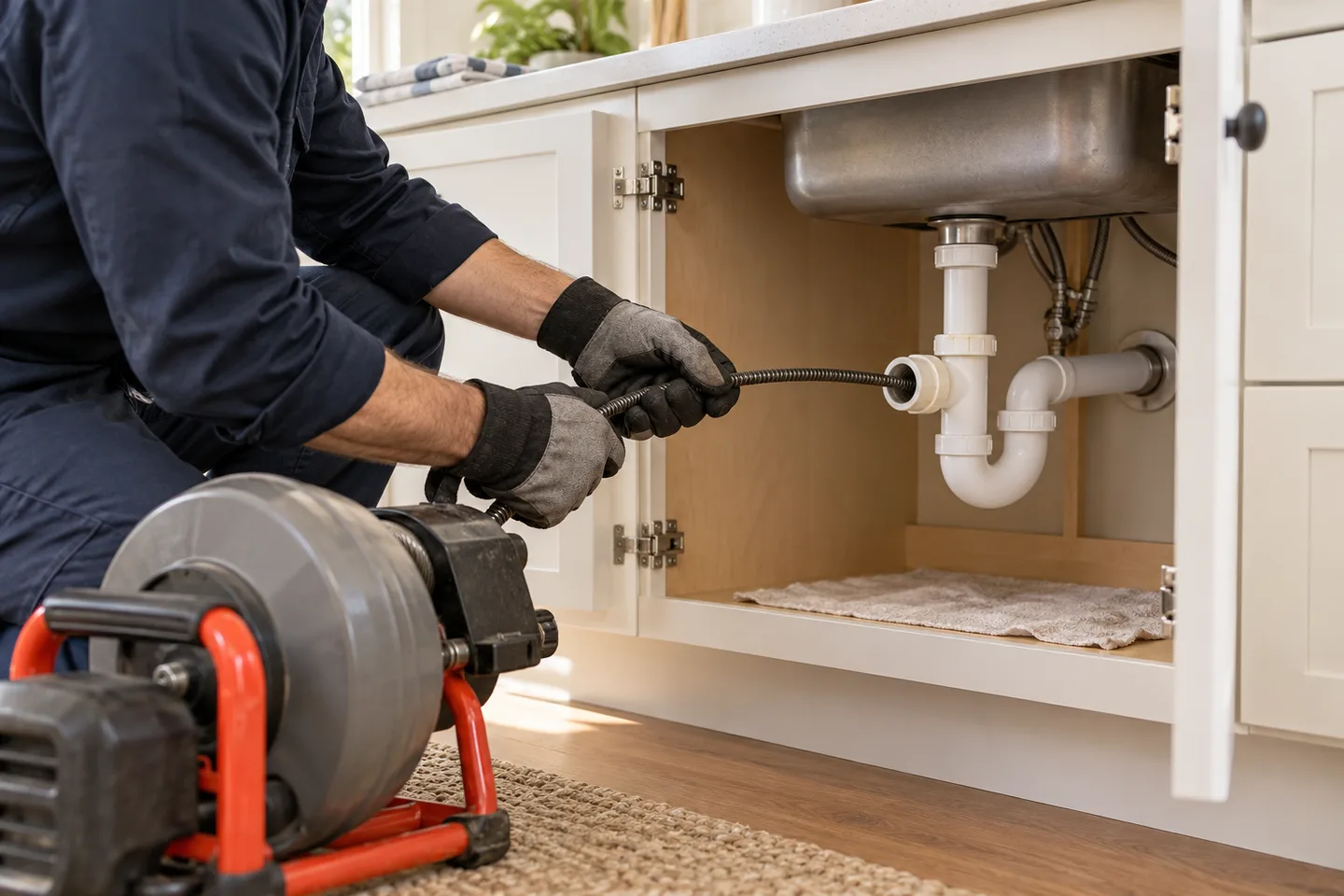
When the sink already backs up, report both the symptom and its history. Our kitchen drain cleaning page explains why both bowls, appliance connections and recurring restrictions matter. Describing a greasy meal does not prove that grease is the only cause of the current blockage.
Is it safe to pour coffee grounds down the drain?
Use a suitable waste or accepted compost route for coffee grounds rather than rinsing them into a sink. Do not treat the grounds as a cleaning material for the pipe. A waste product should not be added to a drainage system simply because it is small enough to pass a strainer opening.
Empty the coffee basket or reusable filter over the appropriate container before rinsing. For a shared office kitchen, put that container close to the preparation area and give staff a simple instruction. Convenience at the point of use is often more effective than a long list posted elsewhere.
If a few grounds accidentally enter the sink, do not respond by adding chemicals or repeatedly filling a slow basin. Watch normal use and report any developing restriction. A blocked drain needs assessment based on its behavior, rather than an assumption that one recent spill explains everything.
Separate food scraps from washing water
Scrape plates and collect peels, fibrous food, fruit pits, bones and other substantial scraps before washing. A removable strainer can catch material that would otherwise enter the opening, but it works only when someone empties it. Do not tip the contents back into the sink during cleaning.
An in-sink disposal is an appliance with its own use restrictions. Follow its manufacturer's instructions rather than treating it as permission to send every type or quantity of food waste downstream. If the property uses an onsite wastewater system, discuss disposal use with the person responsible for that system.
In a busy kitchen, divide the tasks: scrape, collect and then wash. For a food-service premises, establish the approved waste-handling routine with management. A household guide does not replace the business's required procedures or the maintenance arrangements for a commercial grease interceptor.
Keep wipes, hygiene waste and hair out of bathroom drains
Use toilets for human waste and appropriate toilet paper, and provide a bin for wipes and hygiene products. Do not use the toilet as an alternative disposal route for paper towels, cotton products or other bathroom waste. Clear instructions are especially useful in guest bathrooms and shared facilities.
A hair catcher can reduce hair entering a shower opening. Empty it into a suitable bin and clean the accessible cover as part of the bathroom routine. Do not push an accumulated mat farther into the opening to make the visible surface look clear.
Hair and soap residue are relevant to a local bathroom restriction, but connected symptoms need a wider view. If toilet use causes water to appear in the shower, describe that relationship. Bathroom drain cleaning enquiries should identify which fixtures react together and what has already been tried.
Use appropriate collection routes for hazardous liquids
Do not pour leftover paint, solvents, motor oil, pesticides or similar hazardous household waste into a sink, toilet or outdoor drain. Follow the product's disposal directions and the local collection program's instructions. The correct destination depends on the product; a drain is not a general-purpose disposal facility.
Keep unwanted products in identifiable containers and avoid combining leftovers. Mixing unknown liquids creates a different problem from deciding how to dispose of one labeled product. If collection is needed, ask the responsible waste authority what it accepts and how the material should be presented.
A blocked sink is also not the place to experiment with several cleaners. If a drain-opening product has already been used, retain its details and tell the provider. Our guide to baking soda and vinegar in clogged drains explains why visible fizz is not evidence that an obstruction has been removed.
Treat outdoor runoff drains as a separate system
Do not wash cooking waste, cleaning chemicals, paint or yard debris into a private inlet or street gutter. A stormwater route is different from the sanitary line carrying indoor wastewater. Identify which system is affected before asking for cleaning or assuming a household drain treatment is relevant.
Keep leaves and loose litter away from accessible surface grates as part of ordinary property upkeep. Do not lift a heavy grate, enter a chamber or reach into an unknown drain. If water remains pooled, describe the inlet, recent conditions and whether the problem is on private or public property.
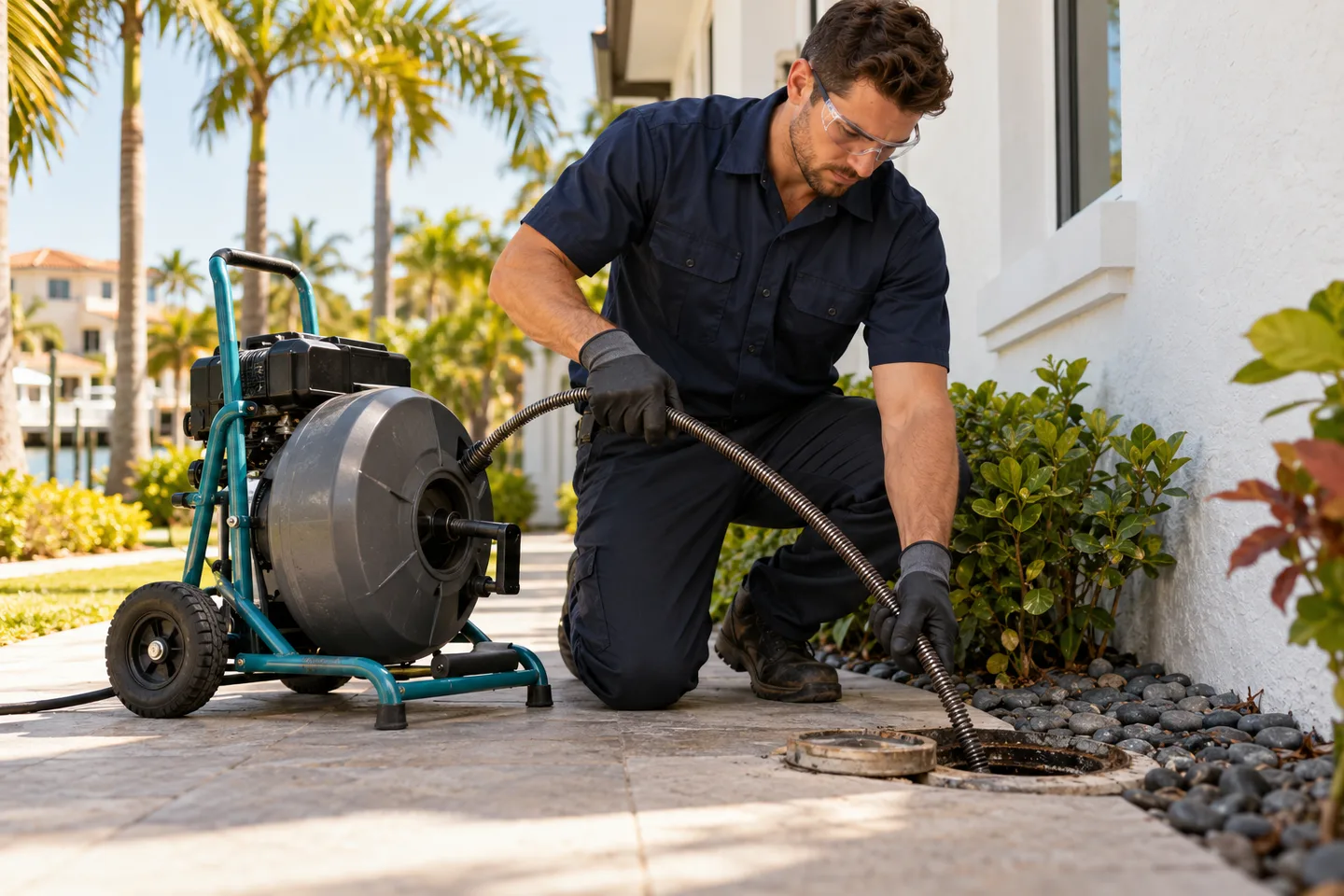
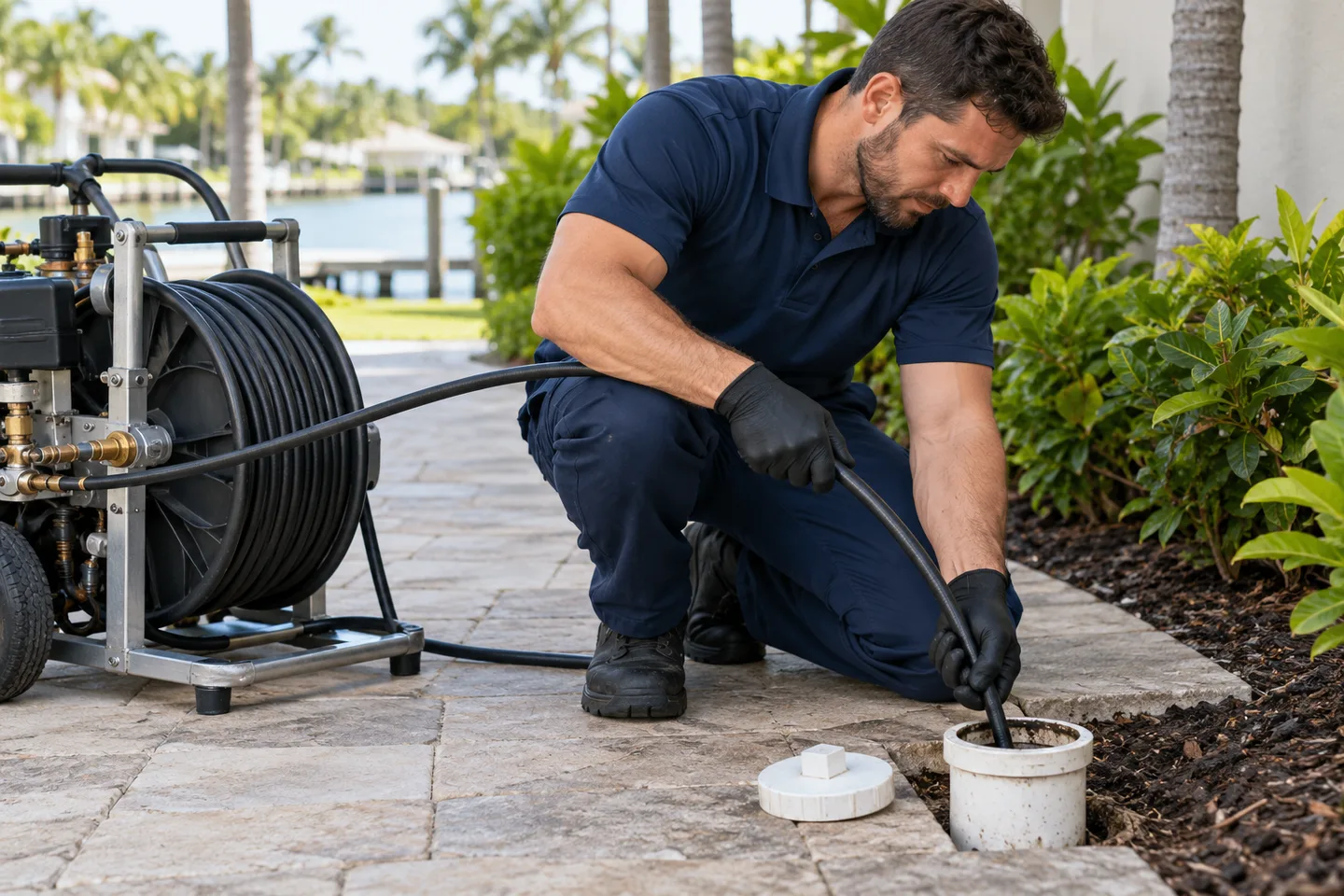
The storm drain cleaning page covers enquiries about private runoff drainage. A restriction at an inlet is not the only possible reason for poor drainage, and cleaning cannot be promised to correct every grading, capacity or structural issue.
Tell the provider if the property uses a septic system
Some properties discharge to an onsite wastewater system rather than a public sewer. If that applies, say so when arranging help. Cleaning a building's drain branch is a different task from diagnosing or maintaining the tank and drainfield. Similar indoor symptoms can require different specialist attention.
The EPA's septic guidance recommends keeping grease, coffee grounds and inappropriate solids or chemicals out of the system. It also explains that disposal use adds material to the tank. Those recommendations apply specifically to onsite systems and should not be presented as proof of what caused a particular household blockage.
Keep system records with the property's other maintenance information. If you do not know the connection type, check the available property documentation or ask the responsible manager. Drain Cleaning Fort Pierce is a referral service; a provider must confirm the work it can undertake.
Recognize when prevention is no longer the immediate task
Water rising in another fixture, several drains failing together or wastewater escaping requires attention to the active problem. Stop water use that feeds the backup and keep people away from wastewater. Do not keep testing fixtures to find out whether another load will finally move the obstruction.
A recurring blockage also deserves investigation beyond a stricter disposal routine. Deposits, objects and pipe defects can produce similar symptoms. Cleaning may address an obstruction without repairing the underlying condition, so ask which line is being reached and what the findings suggest.
Review the signs of a clogged main drain line when multiple fixtures react together. For a service enquiry, have the address, symptoms, connection type if known, access arrangements and prior product use ready. The independent provider confirms availability and scope; the actual price is finalized after discussion on the call.
Related questions
What should you never pour down your drain?
Keep unwanted cooking grease and oil, coffee grounds, food scraps and hazardous liquids out of drains. Collect solids before washing, use appropriate waste routes and follow local collection instructions for products such as paint, solvents and motor oil.
Is it safe to pour coffee grounds down the drain?
Use a suitable waste container or an accepted compost route instead. Empty filters before rinsing and do not add grounds as a drain-cleaning treatment. Small particles passing the opening do not establish that the downstream line is clear.
Does a sink disposal make food scraps safe for drains?
A disposal has appliance-specific restrictions and does not make every material or quantity appropriate for downstream piping. Follow its instructions and collect substantial scraps separately. For an onsite wastewater system, discuss disposal use with the person responsible for the system.
Should I wash leaves into an outdoor drain?
No. Keep accessible surface grates free of loose leaves and litter without entering or reaching into the drain. Report continued ponding and identify whether the inlet is private or public. Do not put yard debris or household waste into runoff drainage.
Can careful drain habits prevent every blockage?
No. They reduce avoidable material entering the line but do not repair damaged piping or establish the condition of an underground connection. Repeated clogs and connected fixture backups need assessment rather than a promise that a disposal routine will solve every problem.